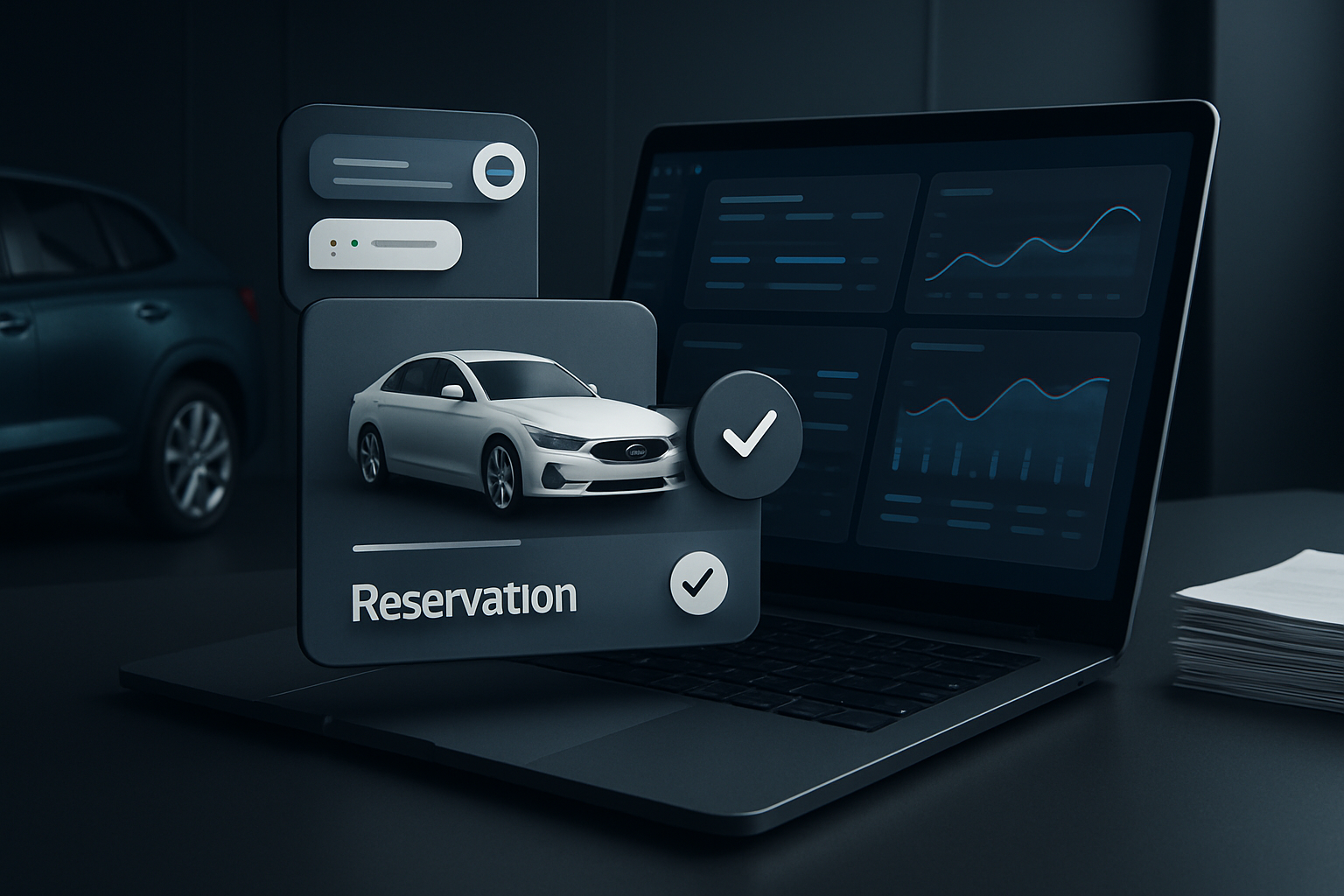

How to transform your rental company into a scalable operation without increasing fixed costs
Discover how to transform your rental company into a scalable operation without increasing fixed costs. Learn to use automation, AI, data governance, and pricing strategies to grow, improve the customer experience, and increase margins with measurable ROI.
Direct response
Scaling a rental company without increasing fixed costs involves automation of bookings and billing, dynamic pricing with AI, intelligent fleet management, and assisted customer journeys. Combine data governance, ROI targets, and a phased implementation roadmap to grow with the same asset base.
Entering a journey of sustainable growth without increasing fixed costs is the goal of any rental company wishing to compete in the current digital landscape. Scaling doesn't just mean having more vehicles; it means delivering more bookings with the same cost base, boosting productivity, customer satisfaction, and margin per rental. Below we present a practical path, with concrete steps, success metrics, and real implementation examples.
Practical summary: scalability is doing more with the same cost base, optimizing processes, data, and customer experience. The objective is to reduce manual dependencies, accelerate response time, and maintain stable margins even in the face of seasonality and competition.
Index
- Why scale without increasing costs?
- Operations framework for scale
- Dynamic pricing and demand management
- Fleet management and optimized availability
- Customer experience and assisted journeys
- Data governance and analytics
- Case study: transforming traditional management into scalable
- Conclusion and next steps
Why scale without increasing costs?
Effective scalability does not depend solely on more cars. It's about expanding the ability to serve more customers with the same structure, reducing rework and increasing service speed. Key practices include:
- Automation of bookings, invoicing, collections, and deadline renegotiations.
- AI-based dynamic pricing for occupancy, seasonality, and local demand.
- Fleet management with real-time visibility, predictive maintenance, and intelligent allocation.
- AI-assisted customer journeys, with human intervention only in cases requiring empathy and complex decision-making.
The automation + data + customer experience triad creates a growth machine that does not increase fixed costs, it only intensifies the efficiency of the existing base.
Operations framework for scale
Four pillars for a practical path applicable to rental companies of different sizes:
1) Map end-to-end processes
Document the flow from click to delivery, including reservation, payment, identity verification, contract, delivery, support during the rental and return. Identify bottlenecks, rework, and delays that increase costs and reduce conversion.
2) Implement intelligent automation
Automation goes beyond software: it is orchestration of workflows with AI to understand context. Automate reservation confirmations, sending contracts, charges and renegotiation of deadlines. Examples: redirect customers to payment options with higher likelihood of conversion based on profile.
3) Data governance and analytics
Create a single data core with quality, naming standards and validation of contracts and payments. Clear KPIs by region, channel and campaign, with dashboards that guide rapid decisions and prove ROI of initiatives.
4) People + assisted journeys
Train teams to operate where automation can't reach. Combine AI in chatbots for quick responses with human agents in sensitive situations. The goal is to reduce resolution time and increase customer satisfaction.
Dynamic pricing and demand management
Dynamic pricing is the compass of scalability. Adjust rates based on demand, seasonality, local events and availability to maximize occupancy and margin. An AI-powered pricing engine helps set the ideal price per reservation, reducing idle time and increasing revenue per vehicle without expanding the fleet.
Practical cases include automatic adjustments for holidays, weekend demand variations, and segmented promos for returning customers. The key is to have reliable historical data and business rules that allow human intervention when necessary, to maintain margin and reputation.
Fleet management and optimized availability
Scaling without increasing fleet depends on perceived availability and operational efficiency. Key practices:
- Real-time utilization monitoring with predictive preventive maintenance.
- Smart allocation: pairing vehicles by customer profile, location and duration.
- Optimized delivery routes to reduce logistics costs and service time.
Modern tools allow simulating fleet scenarios with historical data, helping balance maintenance costs, depreciation, and expected revenue.
Customer experience and guided journeys
Experience is the differentiator. Well-designed journeys reduce friction and increase repeat bookings. Key components:
- Digital contracts with verifiable signatures and proof of use.
- AI that anticipates common questions and alerts humans when necessary.
- Synchronized multichannel communication (website, app, WhatsApp) with consistent responses.
Practical results: standardizing messages, segmenting offers and automated follow-ups can raise the conversion of visits to bookings by 18–25% without increasing headcount.
Data governance and analytics
Data is the strategic asset of a scalable rental company. Governance brings compliance, quality, and reliability of decisions. Essential points:
- Key metrics (KPIs): occupancy, fleet utilization, average delivery time, NPS.
- BI dashboards by region, acquisition channel, and campaign performance.
- Data policies for privacy, retention, and secure access to sensitive information.
With well-governed data, it is possible to audit decisions, justify ROI, and plan new automation phases based on real numbers.
Case study: transformation from traditional management to scalable
Regional rental company with 120 vehicles faced seasonality and squeezed margins. In eight months, applying the framework, achieved:
- Reduce reservation delivery time by 28% with contract automation and identity verification.
- Increase average occupancy from 72% to 84% without purchasing additional fleet.
- Raise revenue per vehicle by 15% through dynamic pricing and segmented promotions.
Key to success: align technology, data governance, and a culture of continuous improvement with a focus on the customer and operational efficiency.
Conclusion and next steps
A sustainable scale comes from the synergy between processes, data, technology, and people. Start with a quick diagnostic in the areas with the greatest impact: reservation automation, dynamic pricing, fleet management, and data governance. Build a 90-to-180-day roadmap with measurable ROI targets and clear governance between teams and systems.
At SisRental, we support your rental company from initial mapping to the implementation of automation, AI, and data governance solutions. Check out our special materials and see how to turn technology into real growth:
How to increase a rental company's revenue by up to 30% using technology without expanding the fleet and Google My Business for rental companies: how to appear at the top and receive more calls.
Next recommended step: schedule a diagnostic with me to align your fleet's specific roadmap, customer profile, and growth goals with tangible ROI. Let's design together the scalable rental company you're seeking.
Count on me to turn this path into real results, focusing on conversion, profitability, and operational intelligence.
Search
Categories
Popular Posts


Gallery