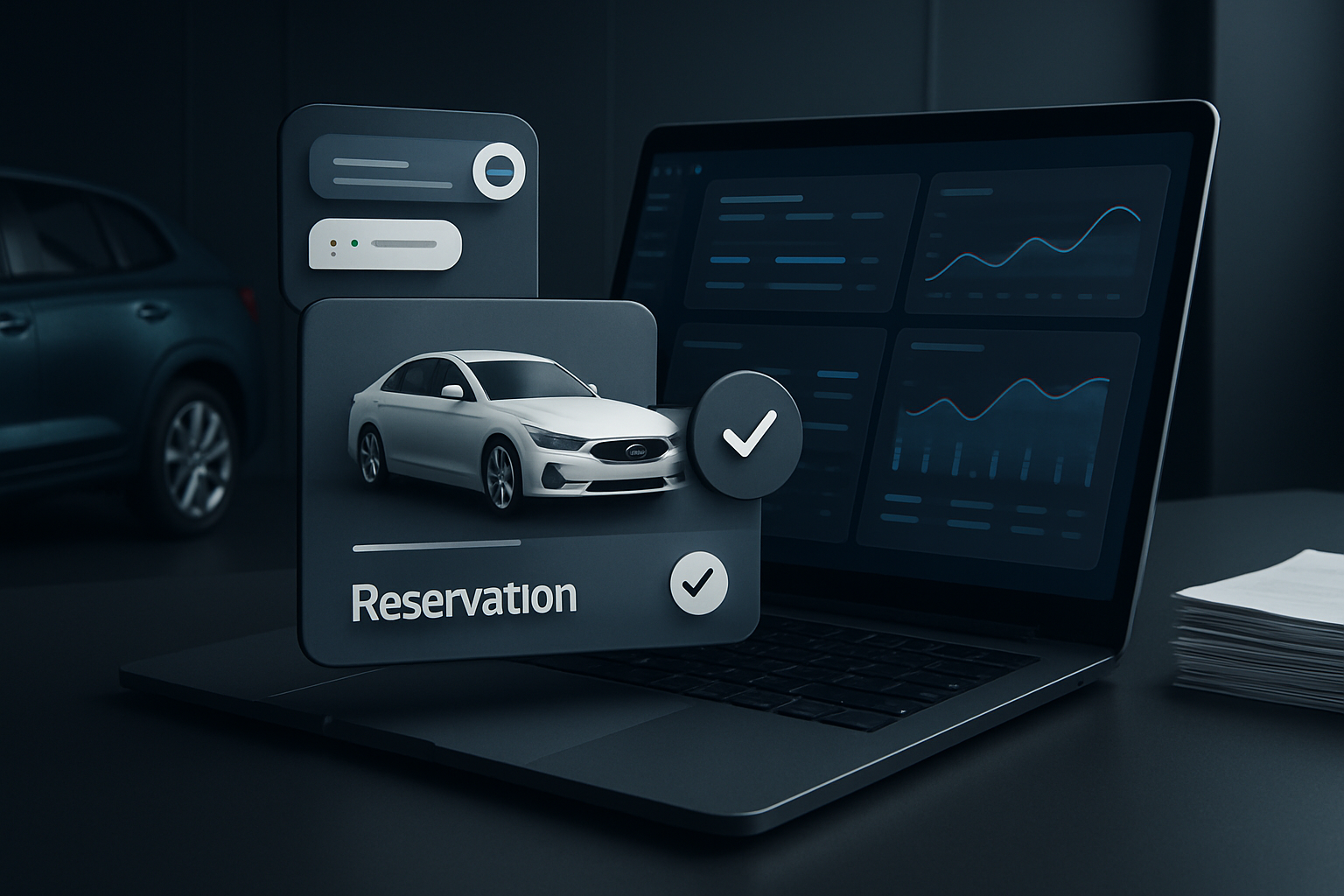

Intelligent fleet management: how to reduce idle cars and maximize profit
Intelligent fleet management turns data into action: reduce idle cars, optimize occupancy, and increase profitability with AI, automation, and data governance, without increasing the fleet.
Direct response
Adopt intelligent fleet management to reduce idleness: use demand forecasting, optimal allocation between branches, predictive maintenance, and dynamic promotions. Combine availability dashboards with data governance to increase bookings and margin, without expanding the fleet.
Introduction with hook
For car rental companies, fleet availability is the main profit driver. Idle cars generate fixed costs, depreciation and revenue drop. Intelligent fleet management turns data into quick decisions, reducing idle time, increasing bookings and expanding the profit margin without the need to expand the fleet. This content presents a practical roadmap, with actionable metrics, data governance and real examples for you to apply now.
This text discusses how to align demand, maintenance, logistics, and pricing policy with technology — without losing focus on profitability gains. At the end, you will find clear paths for ROI, data governance and an invitation to move forward with SisRental solutions.
Table of Contents
- Fleet diagnostics and idle time
- Key metrics to reduce idle time
- Technologies and AI for demand forecasting
- Operational processes for agility
- Data governance: quality, access and ROI
- Case study: real results
- Conclusion
- Call to action
Fleet diagnostics and idle time
The diagnosis starts with a clear map of where idle time occurs by model, branch and sales channel. Combine usage data, odometers, reservation history and maintenance to build an accurate portrait of availability. Real-time telemetry tools help monitor availability, while dashboards by model, region and channel reveal idle patterns.
From this portrait, it is possible to perform redistribution between branches, adjustments to the model mix and targeted promotional actions to reduce idle time and improve profitability.
Key metrics to reduce idle time
- Occupancy rate (days with reservation / total available days) by model and branch.
- Average idle time (time between return and next reservation).
- Turnover by channel (in-person, online, marketplaces) to identify where demand concentrates.
- Cost per idle day (depreciation + maintenance + insurance) per vehicle.
- Maintenance reliability (mean time between failures / service interval) to reduce unplanned downtime.
Monitoring these metrics enables scenario-specific actions, increasing availability without raising fixed costs.
Technologies and AI for demand forecasting
AI does not replace human management; it increases accuracy. Demand forecasting models consider historical data, local events, weather, and holidays to plan the fleet with precision. Key applications:
- Demand forecasting by region and model using historical data, weather, events, and seasonality.
- Allocation optimization between branches to reduce empty trips and restocking time.
- Predictive maintenance to reduce unplanned downtime.
- Promotions and dynamic pricing to stimulate bookings during periods of low demand.
These technologies create a chain of rapid decisions: when the forecast indicates low demand for a model in a given region, the operation can relocate vehicles, offer specific incentives, or adjust the mix to meet the projected demand.
Operational processes for agility
Operational efficiency depends on well-governed data and standardized processes. Critical factors:
- Standardized pickup and return processes with digital checklists to reduce rework.
- Integrated maintenance management with automatic alerts and a shared calendar among teams.
- Replenishment logistics with routing to minimize trips between stores.
- Fuel policy and usage guidelines with digital proofs to reduce costs and wear.
Practical example: if a franchise has 40% of idle cars on weekends, the team can create promotional packages, redeploy models with greater regional acceptance and adjust the mix to meet projected demand.
Data governance: quality, access and ROI
Without governance, data generate noise. Adopt a single data model with:
- Data dictionary clear for idle time, availability, turnover, among others.
- Integrated sources (SIS, telemetry, CRM, booking platforms) with ingestion standards.
- Data quality (cleansing, normalization, validation) with continuous monitoring.
- Access and operational governance with defined responsibilities, usage policies, and auditing.
- KPIs aligned to profit goals and clear ROI per project, with before/after assessment.
Typical ROI comes from increased occupancy, reduced idle time and lower maintenance costs through predictive maintenance. To facilitate visualization, implement an ROI box: Occupancy target X%, idle time reduction Y days, margin improvement Z points, with initial investment and payback estimated in months.
Case study: 18% reduction in idle time over 90 days
An average rental company with 120 vehicles observed high idle time in compact models at the Southeast region branches. Implementation performed:
- AI-based demand forecasting for weekends and holidays.
- Redistribution of 15 vehicles between branches with projected demand.
- Promotions targeted for weekends on fleets with low occupancy.
- Predictive maintenance with a reduced service window, without impacting availability.
Results: 18% drop in idle time, 9% increase in occupancy rate and a 5 percentage point improvement in operating margin in the quarter.
Conclusion
Smart fleet management turns data into tangible actions: less idle time, higher availability, more predictable bookings and increased profit. By aligning demand forecasting, efficient allocation, process automation, and data governance, rental companies gain competitive agility without needing to expand the fleet. Start with a simple diagnosis by model and branch, set monthly occupancy targets, and execute a continuous improvement cycle with AI, automation, and data governance.
Call to action
Ready to take fleet management to the strategic axis of your business? Get to know SisRental solutions and receive a personalized roadmap. Read our guide to increasing revenue with technology increase revenue with technology, participate in a demonstration and request free consulting.
Notes on SEO and internal connectivity
This content aligns with traditional SEO strategies, GEO/LLM SEO and citable snippets. It includes natural mentions of AI, automation, AI-powered discovery and WebMCP, as well as strategic internal links to reinforce relevance and citability, especially with the article about increasing revenue using technology.
Search
Categories
Popular Posts



Gallery