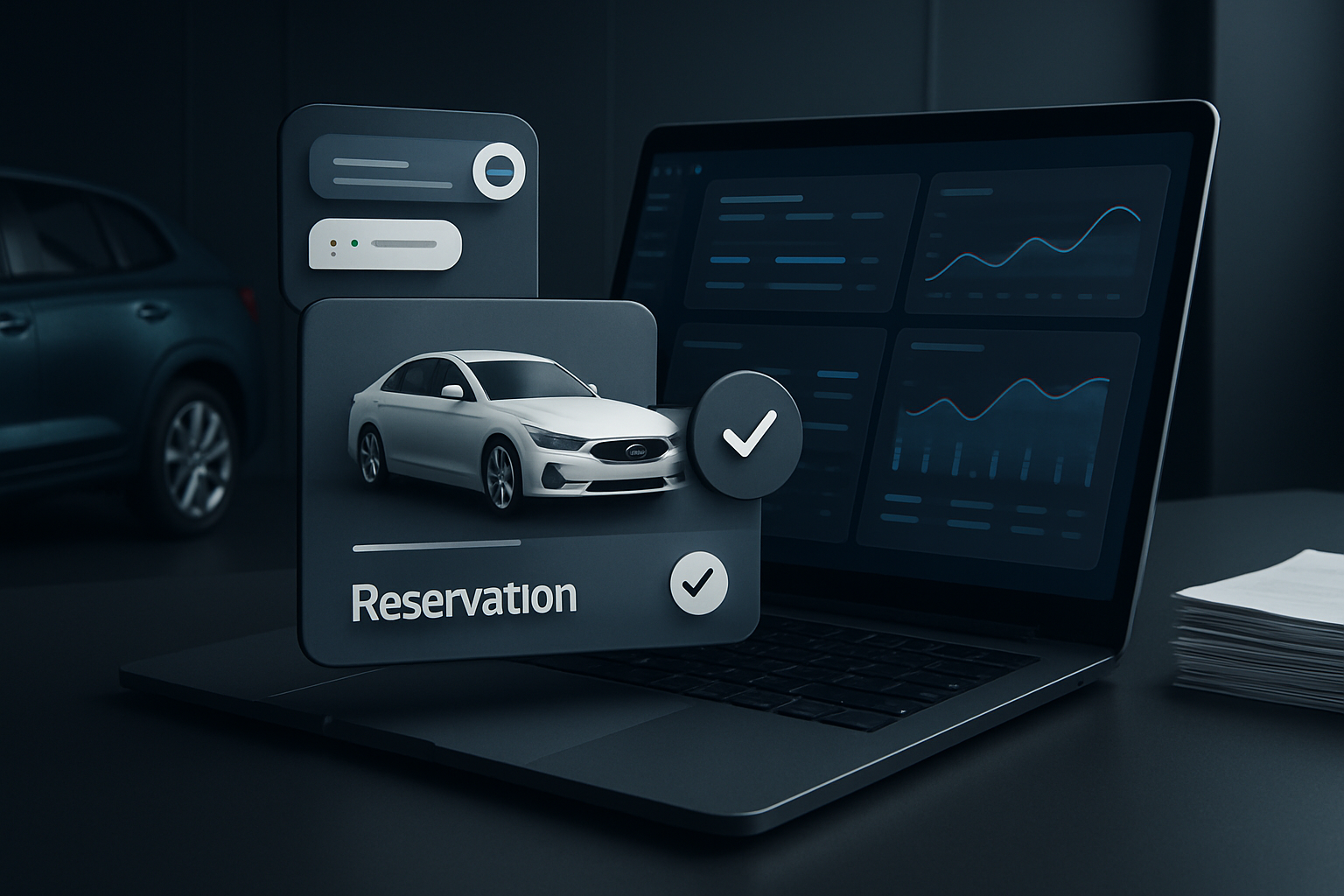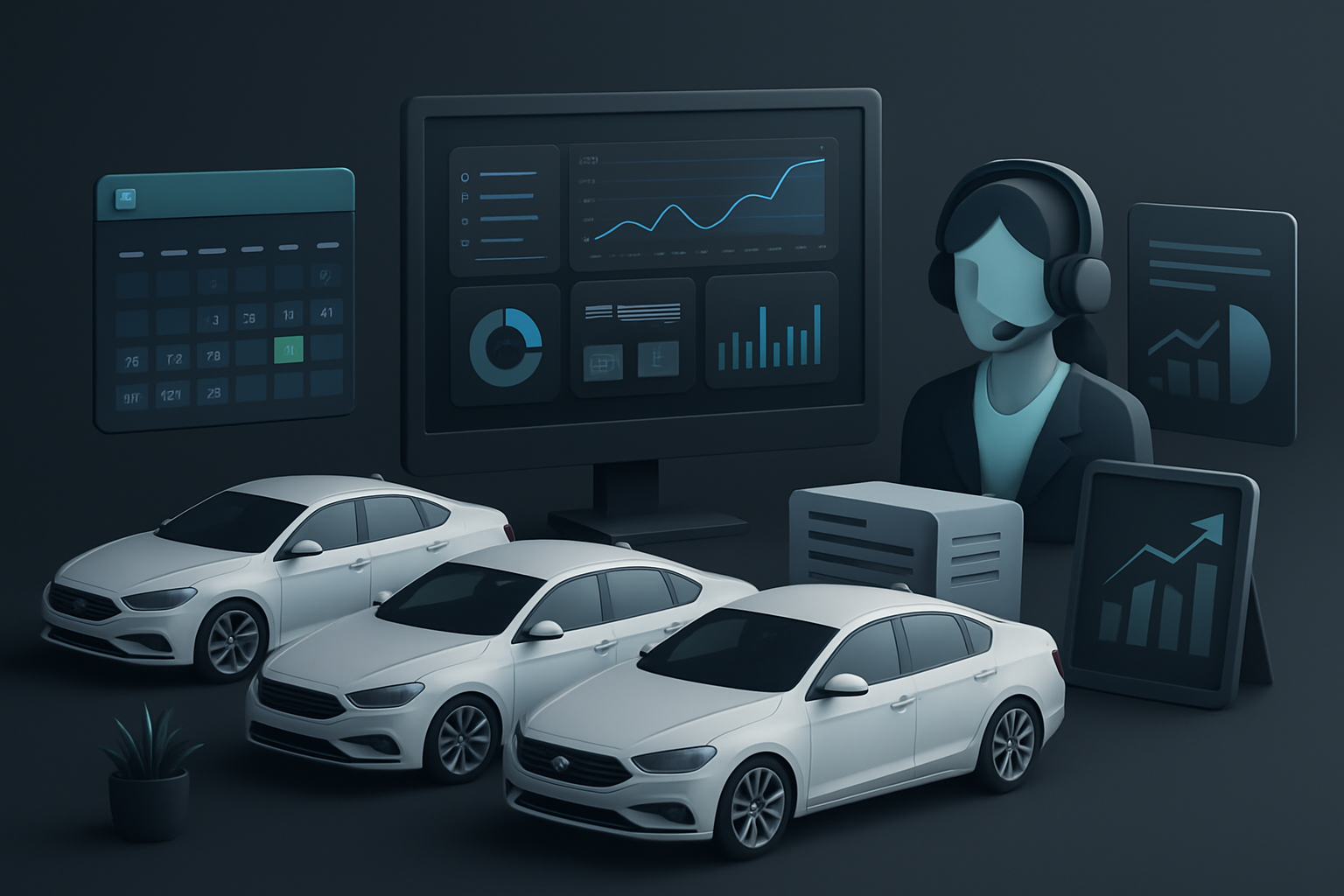

How to integrate payments, reservations, and financial control in a single system
Integrate payments, reservations, and finance in a single system for car rental companies and transform cash flow, data governance, and customer experience. Comprehensive guide with roadmap, KPIs, real examples, and opportunities in AI, automation, and WebMCP to increase profitability and reduce losses.
Direct response
Adopt a unified solution that connects payments, reservations, and finances to reduce friction, accelerate reconciliations, and raise profitability. With integrated modules, data governance, financial dashboards, and AI for anomaly detection, you gain real-time visibility and clear ROI with scalable implementation.
In car rental agencies, payments, reservations, and financial control often operate in silos. The consequence is a fragmented customer experience, lengthy manual reconciliations, and squeezed margins. Integrating these components into a single system is not just a technological improvement; it is a transformation that impacts revenue, governance, and decision-making. This text offers a practical and proven approach, focusing on real results for owners and managers of car rental operations, including an implementation roadmap, key metrics, and opportunities for AI and automation.
Quick index
- Why integrate payments, reservations, and finance?
- How to choose the ideal system
- Data structure and governance
- Integrated workflows
- Real-world cases and practical scenarios
- Implementation roadmap
- Frequently asked questions
- Conclusion and CTA
Why integrate payments, reservations, and finance?
Integration would create a single data line across the entire customer journey, from the reservation to the financial close and collections. Tangible benefits include:
- Real-time visibility of revenue, occupancy, and cash flow
- Reduction of duplicate charges and billing errors
- Automatic reconciliation between payments received and invoices issued
- Upsell opportunities (insurance, accessories) already at the time of booking
- Compliance with data governance, data protection, and security (PCI-DSS, data protection)
Operationally, automated reconciliations reduce hours of manual work, accelerate financial close, and decrease the risk of losses. On the commercial side, a unified view facilitates price adjustments, targeted promotions, and contracts with recurring clients.
How to choose the ideal system
More than price, look at integration capability, scalability, and governance. Key questions:
- Native integration with the payment gateway: which methods are supported and how is the customer experience?
- Reservation management with real-time availability, cancellations, no-shows, and rebooking triggers
- Modularity: is it possible to add CRM, promotions, recurring billing, and data governance?
- Compliance and security: PCI-DSS, data protection, access controls, and audits
- Roadmap, support and SLA: updates, dedicated support for rental companies and regional availability
Request a demo with real data from your business (booking volume, average ticket, sales channels) to assess the system's performance against real scenarios.
Data structure and governance
A cohesive data model avoids divergences between channels (website, app, call center) and simplifies financial reporting. Typical entities include Customer, Reservation, Vehicle, Payment, Invoice and Contract. Governance policies define who can create, read, update, and delete data, as well as retention and quality. A consistent design facilitates automatic reconciliation and the generation of insights for leadership.
Practical example: Unified status (Reservation: Confirmed, Cancelled, No-show; Payment: Pending, Confirmed, Reversed) avoids manual reconciliations and enables automatic alerts for pending charges.
Integrated workflows
Design processes that cross borders between reservations, payments and finance. Key flows:
- Reservation with advance payment: effective collection and automatically generated invoice
- Recurring billing for long-term rental contracts: automatic charges, reversals and invoice adjustment
- Cancellation and refund management: refund triggers, billing policies and customer communication
- Daily reconciliation: reconciliation between received payments and issued invoices with automatic reports
Automate to reduce friction, increase customer trust and accelerate revenue recovery. Use AI for anomaly detection in transactions, debt renegotiation and adjustment of collection rates
Real-world cases and practical scenarios
Case studies help understand the impact. Common scenarios:
- Online replenishment with high demand: integration reduces cancellations and increases payment confirmations
- Mixed fleet: integrated management facilitates allocation, insurance and accessory charges
- Regional operations: consolidated data improve fiscal governance and compliance
Practical example: a rental company with 600 reservations per month, average ticket of R$ 280.00, reduced the accounting close time from 3 days to 1 day and increased the payment confirmation rate by 14%, boosting the profit margin in the following quarter.
Implementation roadmap
Four-phase plan to reduce risks:
- Diagnostics and design: map processes, required data, integrations and business goals
- Controlled pilot: implement in a subset of reservations (e.g., vehicle/store) to validate flows
- Gradual expansion: connect all sales channels, apply collection policies and dashboards
- Governance and continuous improvement: data policies, KPI monitoring and quarterly reviews
Track metrics such as accounting close time, reconciliation rate, % of reservations with confirmed payment, and gross margin by channel. Use AI to suggest pricing improvements, upsell and churn reduction.
Frequently asked questions
Is it possible to migrate without downtime? Yes. The migration is performed in phases, starting with critical data and flows with the greatest impact, with validation windows and rollback. What are the key metrics (KPIs)? Accounting close time, reconciliation rate, % of reservations with confirmed payment, gross margin by channel, customer service NPS during the transition. How does AI fit into daily operations? Anomaly detection, renegotiation suggestions, dynamic pricing and assisted journeys to guide customers in choosing payment and insurance options. What is the typical ROI? It depends on volume, but improvements of 4–10 percentage points in gross margin over 6–12 months are common with effective automation and governance.Conclusion and CTA
Integrating payments, reservations, and financial control is not just updating software; it's adopting a new way of operating that increases profitability, reduces losses, and improves the customer experience. With a unified solution, you gain real-time visibility, reduce reconciliation costs, and create a continuous improvement loop powered by data, automation, and AI.
Ready to move forward? Start with a free diagnostic to map your case, compare implementation options, and receive a personalized plan with estimated ROI. Our team can present real improvement cases with clear actions and a viable timeline. Also consult relevant internal content to enhance the value and confidence of your decision:
How to increase a car rental company's revenue by up to 30% using technology • How to avoid chargebacks in car rental companies • Complete Google Ads guide for car rental agencies
Main CTA: request your free diagnostic and receive an action plan with estimated ROI within up to 10 business days. Secondary CTA: subscribe to our newsletter for templates of workflows, data governance checklists, and weekly case studies.
Note: cited internal content has been optimized to maintain consistency between references and the objective of revenue growth, data governance, and strategic use of AI/automation in car rental operations.
Search
Categories
Popular Posts

Gallery