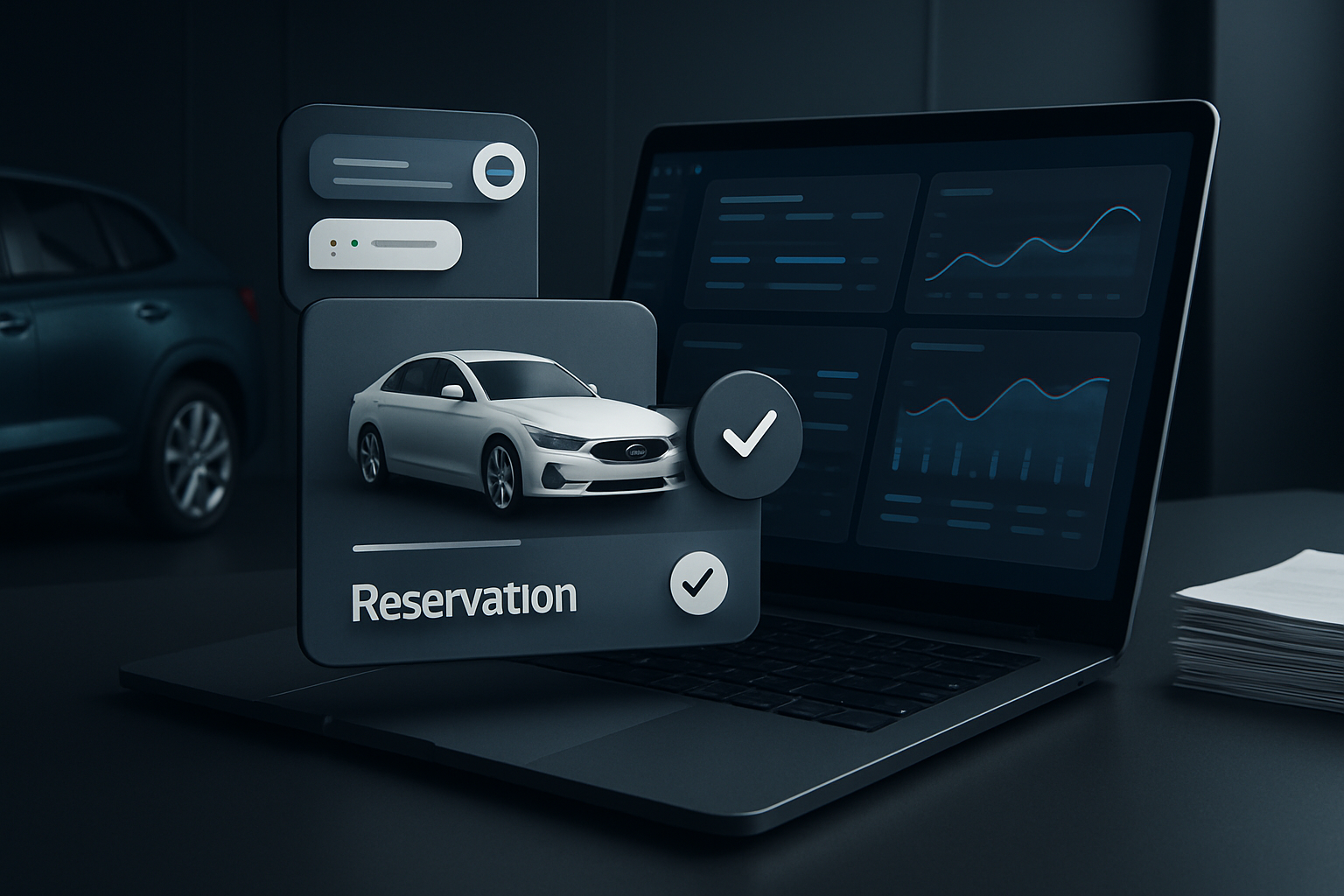

Car rental system: what you can't miss to scale your business
Discover the complete ecosystem a rental company needs to scale: integrated fleet management, reservation automation, billing, AI-assisted support, data governance, and data-driven marketing. A practical guide with goals, ROI, a 90-day kickoff, and real-world examples for fast implementation.
Direct response
To scale a rental company, implement: integrated fleet and operations management, reservation and billing automation, AI-assisted support, data governance, and data-driven marketing. Focus on clear ROI, measurable goals, and a 90-day implementation with a pilot of 20–30 vehicles.
Have you ever stopped to think that the secret of successful rental companies isn't just the number of cars, but the consistency of operations supported by technology? This guide presents the essential ecosystem to scale a car rental company efficiently, connecting fleet, finance, service, and marketing in a single value flow. The proposal is to go beyond punctual improvements: build a system that enables predictability, stable margins, and data-driven growth.
Throughout this content, you will find a complete framework, with clear steps, measurable goals, and real implementation examples. We also outline opportunities in AI, automation, and WebMCP to increase efficiency and competitiveness.
1) The foundation: integrated fleet and operations management
A single system that integrates booking, availability, maintenance, insurance, contracts, and billing is the backbone for scaling. Connected operations reduce silos, frictions, and rework, freeing time for strategy and growth.
1.1 Full fleet visibility
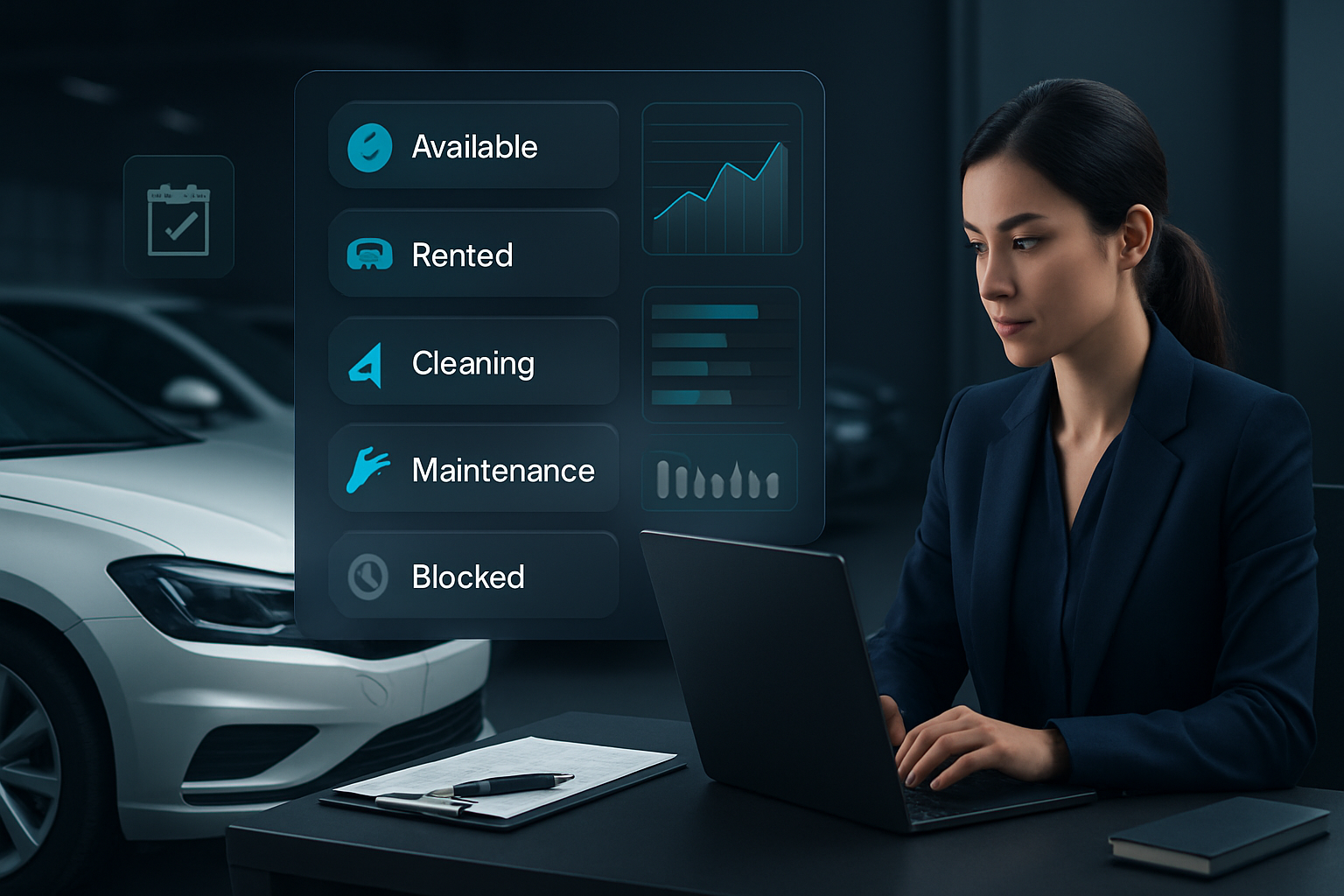
Central dashboard showing the status of each vehicle (available, reserved, in maintenance, high mileage) prevents overbooking and conveys reliability to the team. From a morning view, the sales and logistics teams quickly know who will meet the forecasted demand and which units need attention.
1.2 Planned maintenance and costs
Automate maintenance reminders, incident logging, and replacement scheduling. The total cost of ownership (TCO) becomes predictable, allowing stable pricing, defined margins, and lower cost variability.
1.3 Invoicing, contracts, and insurance
Consolidate contracts, warranties, insurance, and cancellation policies in a single repository. Recurring charges, usage charges, and chargebacks should follow clear rules with automated approval workflows and auditing.
2) Automation of reservations, billing, and service
Automation turns reservations into revenue with less friction, reducing closing time, ensuring accurate rates, and accelerating the billing cycle. The goal is to maintain full control without losing agility.
2.1 Intelligent reservation flow
Validate real-time availability, apply dynamic pricing rules, automatically confirm and offer upsells (insurance, add-ons, period-based rental). Well-designed flows reduce abandonment and increase revenue per reservation.
2.2 Automated billing
Integrate charging with payment methods, issue electronic invoices and send receipts automatically. Proration, usage-based charges and clear billing policies strengthen liquidity and reduce defaults.
2.3 AI-assisted service
Chats and virtual assistants answer common questions, guide on bookings, cancellations and rescheduling, freeing the team for complex cases. Real cases show up to 60% reduction in response time with well-trained AI.
3) Data governance and decision making
Reliable and well-governed data are the engine of scalability. Without governance, decisions become conjectural, impacting margins, pricing and marketing strategy.
3.1 Clear data structure
Define data models for fleet, reservations, customers, contracts and payments. Establish nomenclature standards, data quality and retention policies to facilitate future aggregations and analyses.
3.2 Key metrics (operational OKRs)
Focus on: reservation fill rate, conversion time, CAC per reservation, average ticket, churn, gross margin per channel and time to resolve customer issues. Keep dashboards simple yet actionable.
3.3 Data governance and compliance
Implement privacy policies, data protection and access governance. Data transparency builds internal and customer trust, and reduces regulatory risks.
4) Data-driven marketing and sustainable acquisition
Effective marketing is not just about attracting customers, but attracting the right customers, with stable costs and recurring bookings. Prioritization is by purchase intent and ongoing engagement.
4.1 Assisted customer journey
Map the journey from discovery to booking and post-sale. Use automations to nurture leads with relevant content, seasonal offers, strategic availabilities and booking reminders.
4.2 Local SEO and digital presence
Google Meu Negócio, local SEO, reviews and regional content elevate visibility and generate direct bookings. Pair with targeted ads to maximize ROAS and reduce dependence on intermediaries.
4.3 Partnerships and Interoperability
Integrate with marketplaces, payment APIs, and fleet management platforms to widen reach without operational burden. Interoperability expands the acquisition channel without inflating the workload.
5) Practical scenario: implementing in 90 days
Imagine a regional rental company with 120 vehicles. In 90 days, implement a single system for reservations, billing, maintenance, and CRM. Goals: reduce booking time by 40%, reduce defaults by 25%, increase direct bookings by 15%, and raise net margin by 6 percentage points.
Quick steps: 1) map current processes; 2) choose an integrated platform; 3) migrate data with quality; 4) train teams; 5) launch a pilot with 20–30 vehicles; 6) scale to the entire fleet with data- and customer feedback-based adjustments.
6) Real-world example: how technology transformed an average rental company
Before: limited fleet visibility, manual charges, and fragmented marketing campaigns. After: automated reservation flow, integrated billing, targeted campaigns, and real-time dashboards. Results: 18% reduction in CAC per reservation, 22% increase in monthly revenue, and 28% improvement in customer satisfaction due to faster service.
7) Relation to internal topics
To delve into specific topics, see content that complements this discussion:
- How to increase a car rental's revenue by up to 30% using technology without expanding the fleet
- How to avoid chargebacks in car rental companies: practical strategies to avoid losing money
- How to acquire customers every day for your rental company using Google Ads
8) Frequently Asked Questions (FAQ)
What is integrated fleet management?
It is the coordination between reservations, availability, maintenance, insurance, contracts, and billing on a single platform, reducing operational silos.
How does automation reduce CAC and increase direct bookings?
Automation accelerates the booking cycle, applies dynamic pricing, and facilitates payments, increasing the conversion rate and making it harder for customers to churn to competitors. Additionally, targeted campaigns boost direct bookings.
What is the typical implementation time?
A functional pilot in 4–8 weeks is common, with full migration in 90–120 days, depending on the complexity and quality of existing data.
What metrics to monitor?
CAC per channel, 예약 flow efficiency, fill rate, conversion time, margin by channel, NPS, issue resolution time, and customer satisfaction.
Conclusion
Scaling is not just about expanding the fleet; it's about building a technology ecosystem that connects operations, finance, and marketing. An integrated system with data governance, process automation, and a focus on qualified acquisition enables safe growth, reduces risks, and delivers a superior customer experience. The next step is to map your processes, evaluate software options, and design a roadmap with a clear ROI.
Our team is ready to support: quick diagnosis, solution architecture design, and a tailor-made implementation roadmap for your business. Explore our solutions and schedule a strategic consultation.
CTA: Ready to transform your rental agency? Talk to our team for a quick diagnosis and build your automation roadmap today.
Useful links to dive deeper: Google My Business for rental agencies, Why your rental agency doesn't appear on Google.
Search
Categories
Popular Posts


Gallery